Daylight saving time ends Nov. 1: how to protect your sleep, and where permanent time stands
Most of the country gains an hour on the first Sunday in November. The House voted this summer to end the clock changes, but the Senate has not acted, so the switch goes ahead.
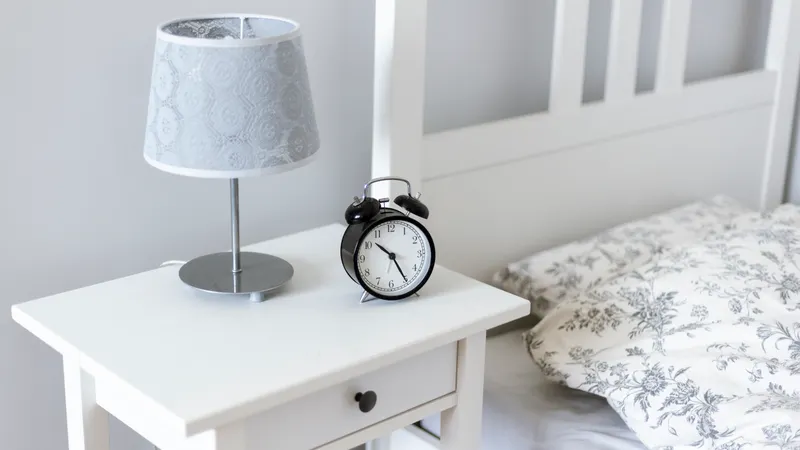
Daylight saving time ends at 2 a.m. local time on Sunday, Nov. 1, 2026, when clocks in most of the United States move back one hour to 1 a.m. The National Institute of Standards and Technology says daylight saving time ran from March 8 to Nov. 1 this year. Sunrise and sunset will come about an hour earlier by the clock, which means darker evenings for commuters and lighter mornings for early risers.
Under federal law, daylight saving time begins on the second Sunday in March and ends on the first Sunday in November. Phones, computers and other connected devices typically update on their own. Wall clocks, ovens and car dashboards usually need to be changed by hand.
Who changes clocks and who does not
According to NIST, daylight saving time is not observed in Hawaii, American Samoa, Guam, Puerto Rico, the U.S. Virgin Islands or Arizona, with the exception of the Navajo Nation reservation, which does observe it. People in those places keep the same clock time on Nov. 1.
The Uniform Time Act lets a state exempt itself from daylight saving time, but only by staying on standard time all year. A state cannot adopt permanent daylight saving time on its own. That would take an act of Congress.
Why the time change can affect sleep
Your body runs on internal clocks called circadian rhythms, and "light and dark have the biggest influence" on them, according to the National Institutes of Health's National Institute of General Medical Sciences. A sudden one-hour shift in clock time does not instantly reset those rhythms.
The National Institute for Occupational Safety and Health, part of CDC, says it can take about one week for the body to adjust to new times for sleeping, eating and activity. Until then, people may have trouble falling asleep, staying asleep or waking at the right time. NIOSH notes that people who naturally go to bed and wake up early, and older workers, may have more trouble with the fall change. It also says drivers who have not adjusted to the darker evening commute might be at somewhat higher risk of a crash.
How to adjust your sleep
NIOSH and CDC suggest several steps. None requires special equipment.
- Shift gradually. Starting about three days before the change, NIOSH suggests moving your bedtime, wake time, meals, exercise and light exposure by 15 to 20 minutes a day. For the fall change, that means moving them later.
- Get rested beforehand. Being short on sleep before a time change increases health and safety risks, so NIOSH advises making sleep a priority for several days before Nov. 1.
- Get morning light. Bright light helps set your body clock, according to a NIOSH guide to time changes. A walk outside early in the day can help.
- Keep a steady schedule afterward. Once you adjust, NIOSH recommends a regular time for sleeping and waking.
- Be careful on the road. NIOSH advises caution when driving or operating machinery if you feel drowsy around the time change.
CDC's general sleep guidance also applies. Adults 18 to 60 need 7 or more hours a night, adults 61 to 64 need 7 to 9 hours, and adults 65 and older need 7 to 8 hours. CDC recommends:
- Going to bed and getting up at the same time every day
- Keeping your bedroom quiet, relaxing and at a cool temperature
- Turning off electronic devices at least 30 minutes before bedtime
- Avoiding large meals and alcohol before bedtime, and caffeine in the afternoon or evening
- Exercising regularly and maintaining a healthy diet
CDC says to talk with a health care provider if you regularly have trouble sleeping.
Where the push for permanent time stands
On July 14, 2026, the House passed H.R. 139, the Sunshine Protection Act, by a vote of 308 to 117, according to the Clerk of the House. The bill would make daylight saving time permanent, ending the twice-yearly clock changes.
The Senate received the bill on July 15 and referred it to the Committee on Commerce, Science, and Transportation, according to the version published by the Government Publishing Office. As of Oct. 12, the Senate had not passed it, so it is not law and clocks will fall back on Nov. 1 as scheduled. A bill must pass both chambers and be signed by the president to take effect.
Under the House-passed text, states that already exempt themselves from daylight saving time, such as Hawaii and most of Arizona, would be allowed to choose their standard time rather than being moved an hour ahead.
The arguments on each side
Supporters say permanent daylight saving time would give people more daylight in the evening. Rep. Vern Buchanan of Florida, the bill's sponsor, said in a statement after the vote that it would "improve public safety, promote healthier and more active lifestyles" and give families more daylight after work and school.
Sleep medicine groups have pushed in the other direction. The American Academy of Sleep Medicine, which opposed the House bill, advocates permanent standard time instead, saying it "more closely aligns with the sun and is the healthier, safer choice."
Whatever happens in Congress, the next change is set. Clocks fall back on Nov. 1, and daylight saving time is scheduled to begin again on the second Sunday in March 2027 unless the law changes before then.
Sources
- NIST: Daylight Saving Time (DST)
- CDC NIOSH: Daylight Saving: Suggestions to help workers adapt to the time change
- CDC: About Sleep
- Clerk of the U.S. House of Representatives: Roll Call 238, Bill Number: H. R. 139, 119th Congress, 2nd Session
- U.S. Government Publishing Office: H.R. 139 (RFS), Sunshine Protection Act of 2025
- Legal Information Institute (U.S. Code): 15 U.S. Code § 260a: Advancement of time or changeover dates
Article Was Generated By AI. It was researched against the official sources listed above. This article is general information, not financial, legal or medical advice. Spotted an error? Email info@thechopshop.click.